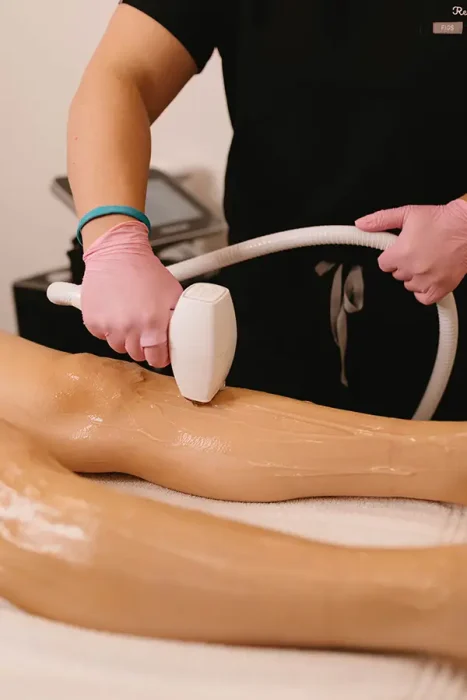
Hair grows in different stages, and laser hair removal is most effective when the hair is in its active growth phase. Because not all hairs are growing at the same time, a series of treatments is needed to achieve optimal results.
Most clients require approximately 6–8 treatments, although the number of sessions varies depending on hair colour, hair thickness, skin tone, treatment area, hormones, and individual response. Maintenance treatments may be recommended over time, particularly for hormonally influenced areas such as the face.
Laser hair removal generally works best on dark, coarse hair because the laser targets pigment within the hair. Advances in laser technology also allow many different skin tones to be treated safely when the appropriate wavelength and settings are selected.
Laser hair removal is less effective on blonde, white, grey, or very light red hair because these hairs contain little pigment for the laser to target. Treatment may also need to be postponed for clients with recently tanned or sunburned skin, active skin irritation, or other contraindications.
With a complete treatment series, hair typically becomes less dense, finer, and slower growing. Results vary from person to person, and laser hair removal should be viewed as long-term hair reduction rather than a guarantee that every hair will permanently disappear.
For the best results, avoid waxing, threading, or plucking between treatments, as the hair follicle needs to remain intact for the laser to effectively target it. Shaving is generally recommended between sessions.